
Brain Stroke Treatment in Ahmedabad
Stroke is a race against time. What happens in the first hour decides how much brain is saved.
Recognise it: BE FAST
Balance lost suddenly. Eyes — sudden loss or doubling of vision. Face drooping on one side. Arm weakness on one side. Speech slurred or confused. Time — note when symptoms started and call for help immediately.
The time of onset matters more than almost anything else you can tell us, because it determines which treatments are still open. If someone woke with symptoms, the time they were last seen well is what counts.
What happens when you arrive
Immediate CT
Imaging distinguishes a clot from a bleed. The treatments are opposite, so nothing starts until this is known.
Thrombolysis
Clot-dissolving medication for eligible ischaemic strokes within the treatment window.
Mechanical thrombectomy
For large-vessel blockage, the clot is retrieved through a catheter in the cath lab.
Neuro intensive care
Monitoring for swelling and complications in the days after.
Rehabilitation
Physiotherapy, speech and swallow therapy started early, not after discharge.
Secondary prevention
Finding the cause — rhythm, carotid, blood pressure — so it does not happen twice.
Why interventional neurology matters here
Mechanical thrombectomy needs a neuro-interventionist, a cath lab and a team available at any hour. That combination is not universal in Ahmedabad. Health1 was built around interventional neurology from the start, and stroke intervention remains the group's founding specialty.
If you are reading this for a relative who is currently symptomatic, stop reading and call 079 6999 6999 or your nearest emergency department now.
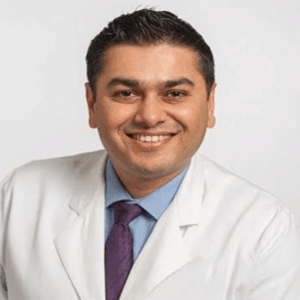
Your team

Common questions
How quickly must stroke treatment start?
Clot-dissolving treatment is generally effective within about 4.5 hours of symptom onset, and mechanical clot retrieval within a longer window for large-vessel blockage. Earlier is always better — call an ambulance immediately.
What is the difference between thrombolysis and thrombectomy?
Thrombolysis is medication that dissolves the clot. Thrombectomy is a procedure where the clot is physically retrieved through a catheter. Large-vessel blockages often need thrombectomy.
Is stroke treatment available 24×7 at Health1?
Yes. Health1 runs a 24×7 emergency department with CT imaging and an on-call intensive care team, and stroke intervention is performed at the Shilaj cath lab.
What should I do if I think someone is having a stroke?
Call for emergency help immediately and note the time symptoms started. Do not give food or drink, and do not wait to see whether symptoms improve on their own.
Can a stroke be prevented after the first one?
Largely, yes. Identifying the cause — irregular heart rhythm, carotid narrowing, uncontrolled blood pressure or diabetes — and treating it substantially reduces the risk of a second stroke.
Related
Neurology & Stroke Care · Stroke warning signs · Brain stroke: complete guide · Stroke recovery timeline · Best Neurologist in Ahmedabad
Medically reviewed by Dr. Keyur Patel, Health1 Super Speciality Hospitals. Last reviewed 7 August 2026. This page is general information, not a substitute for a consultation.