
Best Multispeciality Hospital in Ahmedabad
What to look for when you need more than one specialty under one roof — and how Health1's five hospitals are set up.
What 'multispeciality' should mean in practice
The label is used loosely. A genuine multispeciality hospital can hold a patient whose problem moves between departments without discharging and re-admitting them somewhere else. That needs three things: consultants across the major specialties on the same site, intensive care that can take a deteriorating patient at 3am, and diagnostics in the building so decisions are not delayed waiting for an outside scan.
Health1 runs 950+ beds across five hospitals in Gujarat and Rajasthan, all NABH-accredited, with 24×7 emergency and intensive care at every branch.
How to judge any hospital in Ahmedabad
Accreditation
NABH accreditation means audited protocols for infection control, medication safety and clinical records — not a marketing badge.
Intensive care depth
Ask how many ICU beds and whether an intensivist is resident overnight. This is what matters when something goes wrong.
On-site diagnostics
CT, MRI, cath lab and laboratory in the building. Sending patients out for imaging costs hours you may not have.
Resident vs visiting consultants
Ask whether your specialist operates there regularly or only visits. It changes who reviews you after surgery.
Surgical range
Robotic and minimal-access capability signals investment in recovery time, not just in equipment.
Cashless and PMJAY
Check the hospital is empanelled with your scheme before you need it, not on the day of admission.
Where Health1 sits
Our flagship at Shilaj carries 330 beds with cath lab, CT, MRI, six operation theatres and two robotic systems — the Cuvis joint robot and SSI Mantra 3.0 for minimal-access surgery. SGS Health1 Gandhinagar, Health1 Vastral, Unity Health1 Modasa and Health1 Udaipur extend the same protocols across the group.
We are not the largest hospital group in Ahmedabad and we do not claim to be strongest in every specialty. Our depth is in neurosciences, cardiac, robotic orthopaedics and transplant. For those, this is a genuinely tertiary setup.
Cost, insurance and PMJAY
Health1 accepts PMJAY, CGHS, ECHS and all major insurers and TPAs for cashless treatment. Confirm your specific package with our insurance desk before admission.
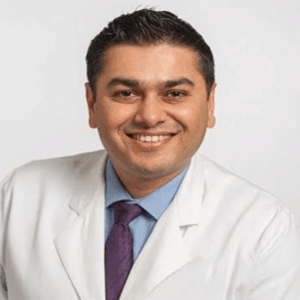
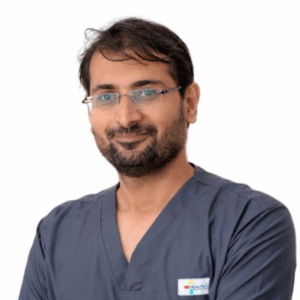
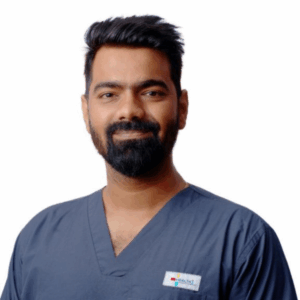
Your team
Common questions
What makes a hospital 'multispeciality' rather than general?
A multispeciality hospital has consultants across many specialties on one site, with intensive care and diagnostics to support them, so a patient whose problem crosses departments can be treated without transfer.
Is Health1 NABH accredited?
Yes. All Health1 hospitals are NABH-accredited, which means audited standards for infection control, medication safety, clinical documentation and patient rights.
How many beds does Health1 have?
The group runs 950+ beds across five hospitals, with the 330-bed Shilaj hospital as the flagship tertiary centre.
Does Health1 accept PMJAY and cashless insurance?
Yes — PMJAY, CGHS, ECHS and all major insurers and TPAs. Coverage for a specific procedure depends on your scheme, so confirm with the insurance desk before admission.
Which Health1 branch should I go to?
For tertiary care — stroke intervention, cardiac intervention, robotic joint replacement or transplant — go to Shilaj. For routine and emergency care, use whichever branch is nearest.
Related
Our Hospitals · Find a Doctor · Insurance & PMJAY · Robotic Surgery in Ahmedabad · Health Packages
Medically reviewed by Dr. Keyur Patel, Health1 Super Speciality Hospitals. Last reviewed 7 August 2026. This page is general information, not a substitute for a consultation.